


On Monday, December 2, 2025, the President of Fiji, His Excellency Ratu Naiqama Lalabalavu, officially unveiled Fiji's new series of polymer banknotes.
In his address, the President stated that the unveiling event is "a tangible symbol of progress in achieving our collective national vision for Progress, Prosperity, and Unity. Progress with the unveiling of our new banknote series highlighting new designs, Prosperity as currency is a symbol of our sovereignty if managed effectively and Unity through shared ownership and pride." He further emphasized the important role of the Reserve Bank of Fiji (RBF) in the prudent management of the Fijian economy, and the significant link to its currency management function. "What we celebrate today is not just the ink and the new design, but that the value of the Fiji dollar printed on paper or polymer, is strong, and reflects the strength of our economy", he remarked.
The new banknote series features new designs on the reverse sides of the notes, while retaining the same primary colors and the existing front design vignettes that showcase the flora and fauna of Fiji. They include new vignettes that strive to showcase Fiji's identity as a nation, its people, resources and national heritage. A significant feature is the transition of all banknotes now to polymer, similar to the current $5 banknote.
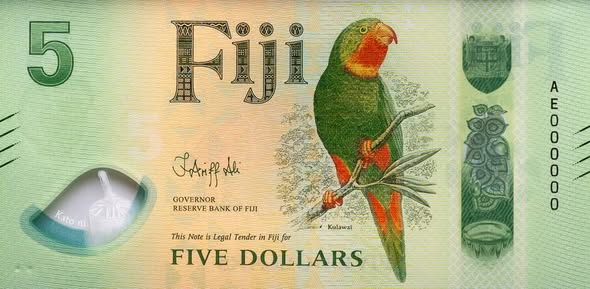
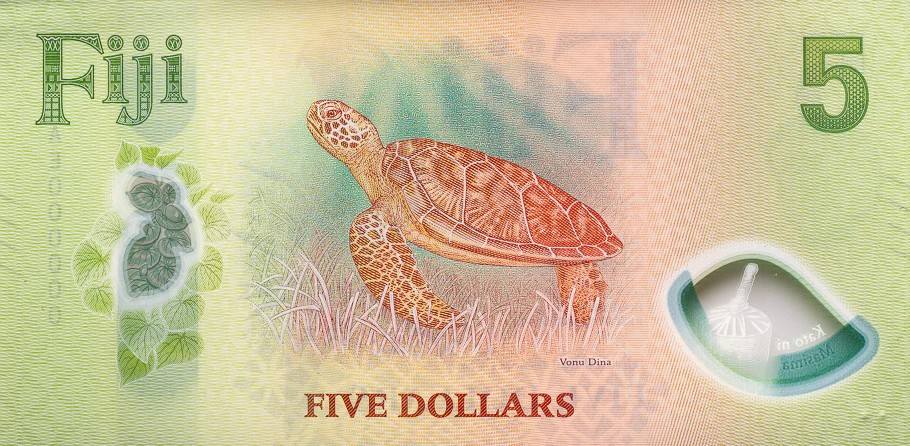
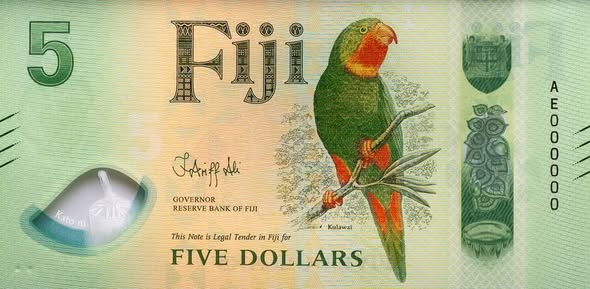
The front of the $5 features a Kulawai (red-throated lorikeet) bird perched on a branch. The Kulawai is a critically endangered lorikeet endemic to Fiji. The reverse now features an endangered turtle, only found in the waters of Fiji, the Vonu Dina (green turtle). It is the only herbivore sea turtle species that feeds primarily on sea grasses and algae. The banknote measures 136x67 mm.
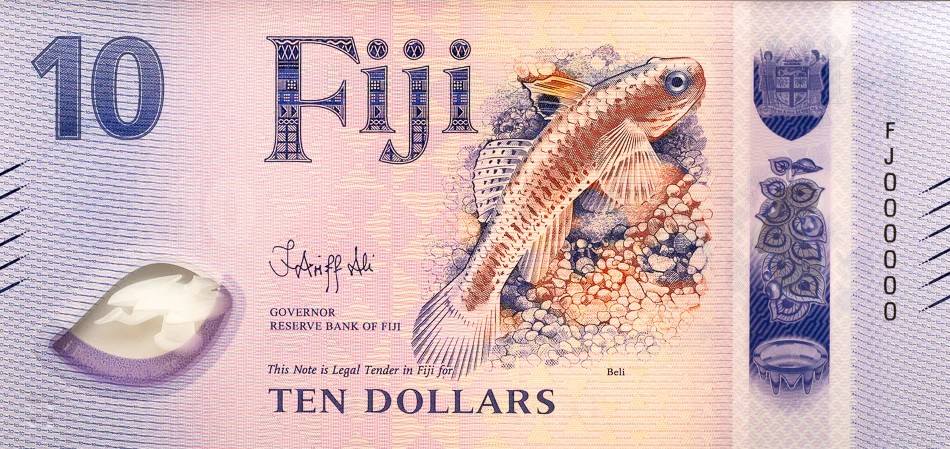
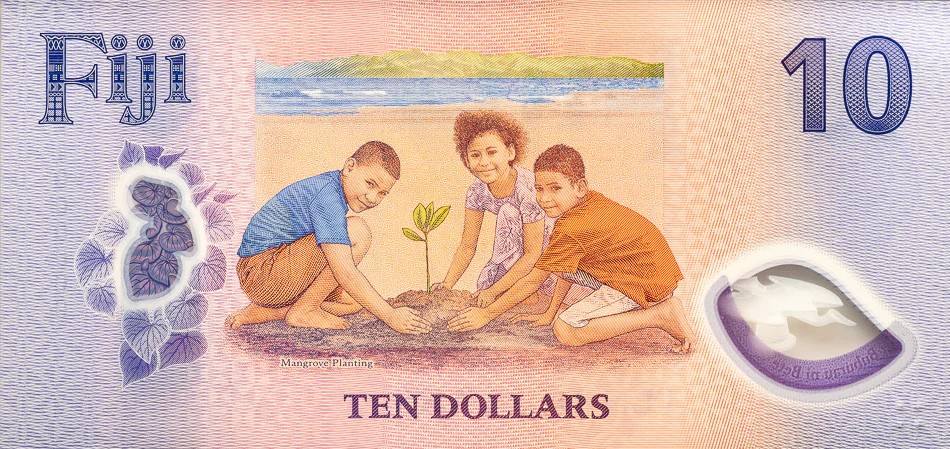
The front of the $10 features the Beli (Redigobius leveri) fish, also known as the Fijian Freshwater Goby, a small, endemic goby from Fiji's rivers and creeks, recognized by its slender body, short dark bars, orange spots, and a distinctive reddish first dorsal fin with a black spot. The reverse now features children planting mangrove along the coastline, a symbol of a future committed to mangrove protection and restoration. Mangroves are environmental heroes, able to extract carbon from the atmosphere, helping to combat climate change. The banknote measures 141x67 mm.
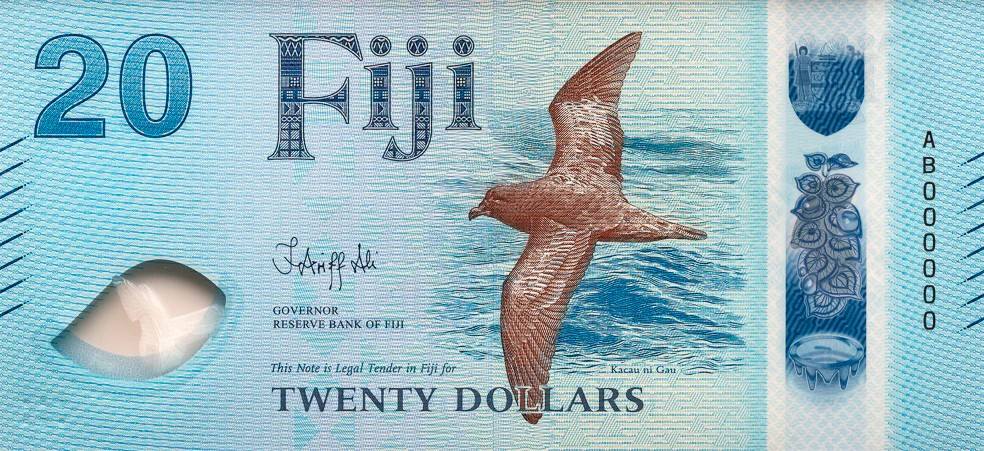
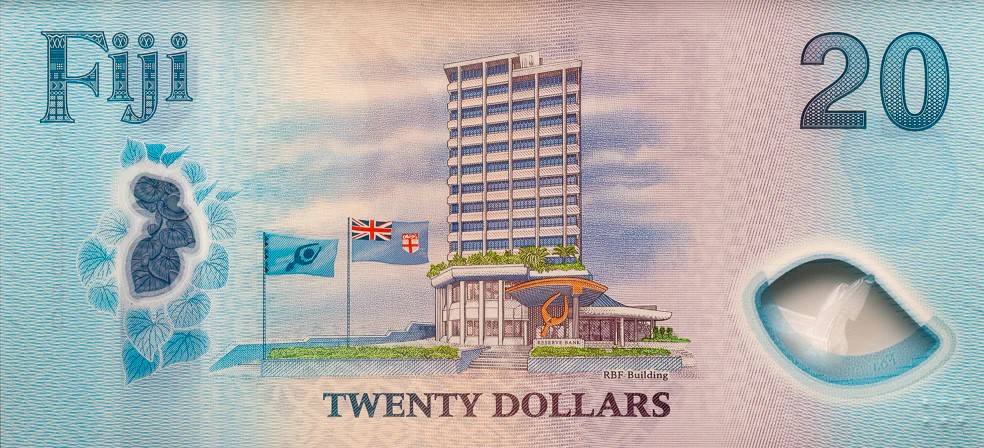
The front of the $20 features the Kacau ni Gau (Fiji petrel) bird, an incredibly rare, critically endangered seabird endemic to Fiji. Only a handful of birds remain on Gau Island. The reverse now features the RBF Building in Suva, the capital. The banknote measures 146x67 mm.
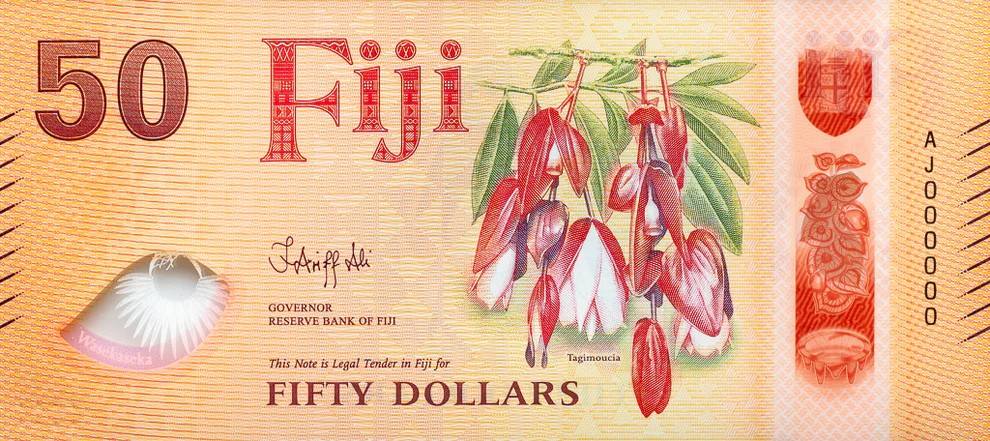

The front of the $50 features Fiji's rare national flower, the Tagimoucia (Medinilla waterhousei), known for its striking crimson and white blossoms that hang in long clusters, growing exclusively in the highlands of Taveuni Island above 600m. The reverse now features a Girmitiya lady with the vessel "Leonidas" in the background. The Leonidas was the first vessel to transport the Girmitiyas, Indian indentured laborers from then British India into Fiji in 1879 to work on sugarcane plantations. The banknote measures 151x67 mm.
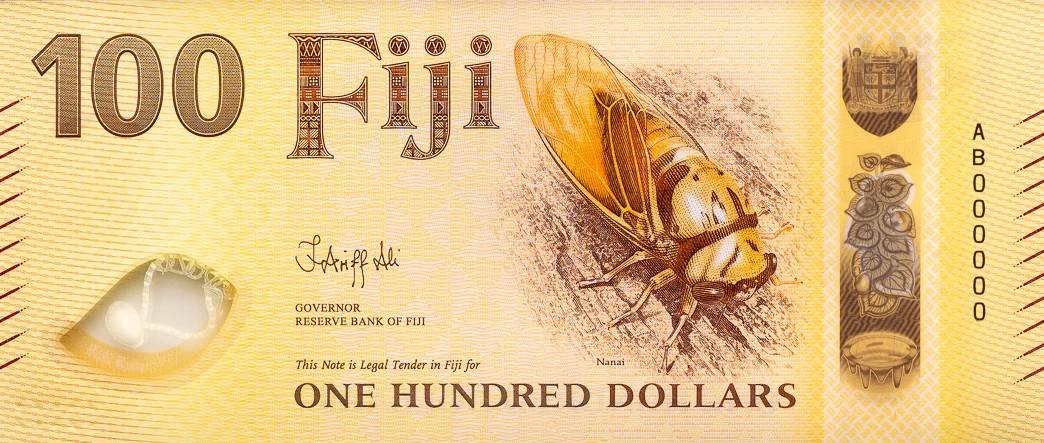
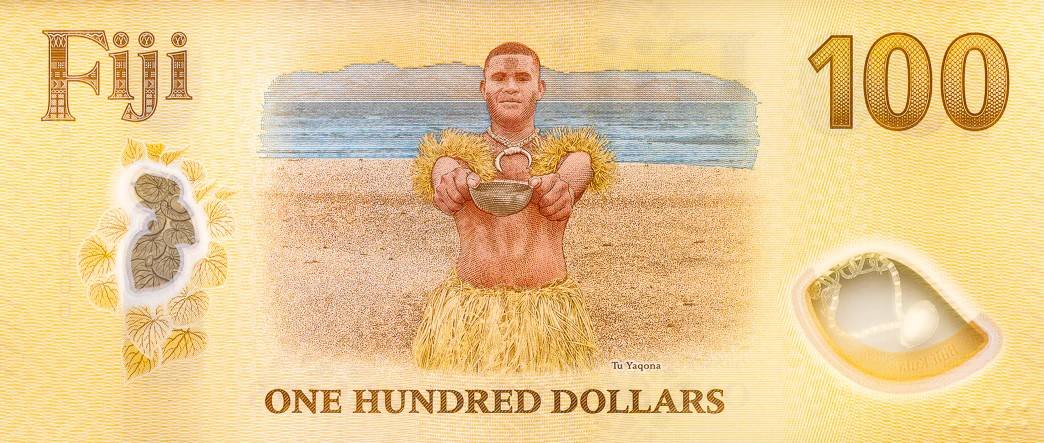
The front of the $100 features the Nanai (Fijian cicada), famous for its rare, synchronized emergence every eight years from underground, symbolizing peace and rebirth in Fijian culture. The reverse now features an i-Taukei man, an indigenous Fijian, dressed in traditional attire holding a bilo (bowl) of kava. Kava is an integral part of the i-Taukei culture and is ritually consumed as part of traditional ceremonies that welcome visitors, resolve conflicts and make peace. Regarded as the national drink of Fiji, kava is consumed widely today in Fiji at casual social gatherings. The banknote measures 156x67 mm.
The new series was printed by Crane Currency of Malta on the Guardian™ polymer substrate, marking the first time the RBF engaged a new banknote supplier, Crane Currency. ZZ replacement notes exist for the series.
The security features of Fiji's new polymer banknotes include:
- Tactile lines: Raised lines along the short edges of the banknotes. The number of raised lines increases with the denomination.
- Tactile dots: Raised dots on the back of the banknotes are included for the visually impaired, increasing number of dots per denomination.
- Clear windows: Transparent windows with color-changing effects.
- Hidden image: The image of an i-Taukei man appears when held up to a strong light.
- Three-dimensional stripe: A security stripe containing Fiji's coat of arms, that appears and disappears when the banknote is tilted. Yaqona (kava) leaves shimmer in the middle of the stripe, with water droplets seemingly appearing over the surface. These leaves are also visible from the back of each banknote. A tanoa (a wooden kava bowl on six legs) appears at the bottom of the stripe.
- Fluorescence: UV features also adorn each banknote.
- Microtext: Microtext of the denominations can also be found on the banknotes.
The new banknotes will be issued into circulation beginning January 2, 2026. The current design banknotes will be gradually withdrawn from circulation and demonetized on December 31, 2026. Although the official release date is January 2, 2026, the RBF began selling their numismatic collector banknotes (see below) to collectors and dealers immediately.
Special numismatic collector banknotes (regular, replacement and autographed), specimens, individual notes and sets in folders and uncut blocks/sheets are available for purchase through the Reserve Bank's online numismatic store.
Donald Ludwig, December 2, 2025
